ICIPS stand for “Innovation and Coevolution In Plant Sexual reproduction“

Plants make up the largest proportion of biomass on earth and are an indispensable source of food for animals and humans. Human food consists largely of grains, nuts, fruits and vegetables, often indirectly via animal products, and all these plant parts that we or our livestock eat are direct or indirect products of plant reproduction. However, the way in which plants reproduce seems very strange from our (animal) perspective.
The ICIPS research group is interested in the molecular base of the origin of plant reproduction. We investigate networks of regulatory genes and signaling molecules with the following questions:
- How did seeds develop?
- How did the carpel, from which the fruit emerges, develop?
- How did pollen grains learn, during evolution, to grow through the carpel by means of pollen tubes, in order to fertilize an egg cell?
- How did the complex communication between the plant embryo and the surrounding nutrient tissue evolve?
- Since when and how have reactive oxygen species (e.g. H2O2) played a role in plant reproduction? And how do these signaling molecules communicate with the cell nucleus?
We work with molecular genetics with land plants whose last common ancestor lived about 500 million years ago:
- the moss Physcomitrella patens
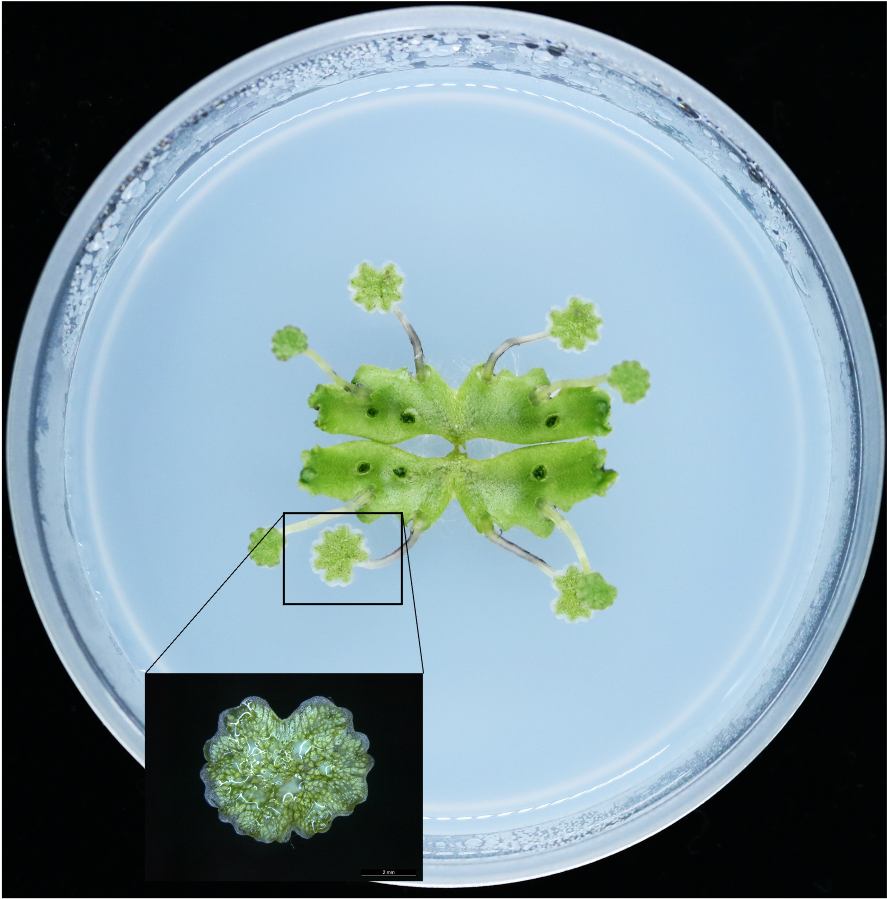
- the liverwort Marchantia polymorpha
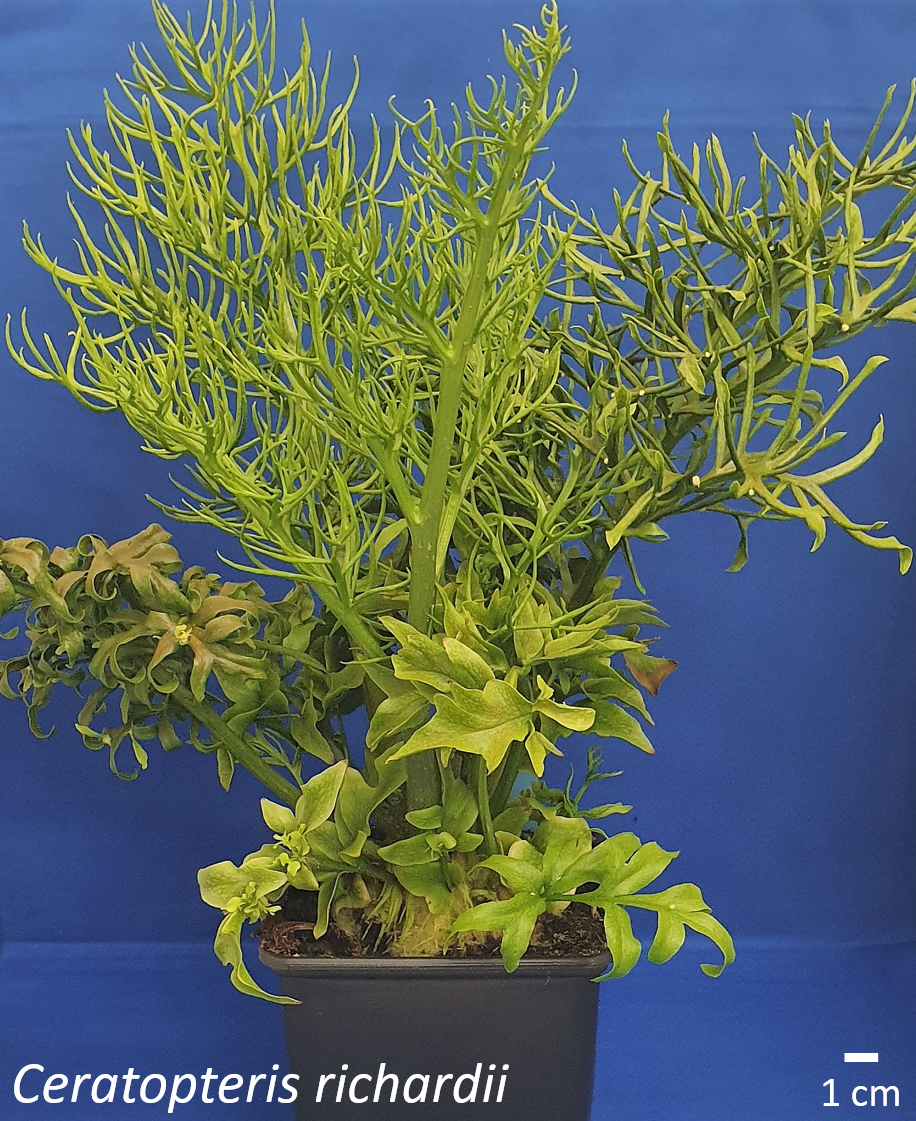
- the fern Ceratopteris richardii (C-fern)
- maize
- thale cress (Arabidopsis thaliana)
Coordination of the research unit is at the Institute of Botany, Plant Developmental Biology research group, Prof. Dr. Annette Becker
Please address your questions to annette.becker@bot1.bio.uni-giessen.de

 DFG Research Unit ICIPS (FOR 5098)